Why Japan Could Be the Ultimate Dark Horse at the FIFA World Cup 2026
The FIFA World Cup 2026 is expected to be dominated by traditional powerhouses such as Brazil, France, Argentina, England, and Spain. However, if there is one nation capable of upsetting the established order and producing a historic run, it is Japan. The Samurai Blue enter the tournament as one of the most well-drilled and tactically sophisticated teams outside football’s traditional elite, making them a genuine FIFA World Cup 2026 dark horse. Their rise over the past decade has transformed them from a respected Asian powerhouse into a team that can compete with anyone on the world stage.
Japan’s credentials as a potential World Cup underdog are backed by results rather than hype. During the 2022 World Cup, they stunned both Germany and Spain in the group stage, proving they can defeat elite opposition under pressure. Since then, Hajime Moriyasu’s side has continued to evolve, recording impressive victories over major football nations and qualifying comfortably for the 2026 tournament as the first non-host nation to secure its place.
Japan’s depth of talent playing across Europe’s top leagues is another plus point. Unlike previous generations that relied on a handful of stars, the current squad boasts quality throughout the pitch. Players such as Takefusa Kubo, Wataru Endo, Ayase Ueda, Daichi Kamada, Ko Itakura, and Zion Suzuki have developed in highly competitive environments, giving Japan a level of experience and tactical maturity rarely seen from Asian nations at a World Cup
Why the Samurai Blue Are Ready for a Deep World Cup Run
Japan’s greatest strength lies in its collective identity. While many nations depend on individual brilliance, Moriyasu has built a team capable of pressing aggressively, maintaining possession, and transitioning quickly between attack and defense. Their structure allows them to compete against technically superior teams while also controlling matches against lower-ranked opponents. Analysts across international football have repeatedly highlighted Japan as one of the most complete dark-horse candidates heading into the tournament.
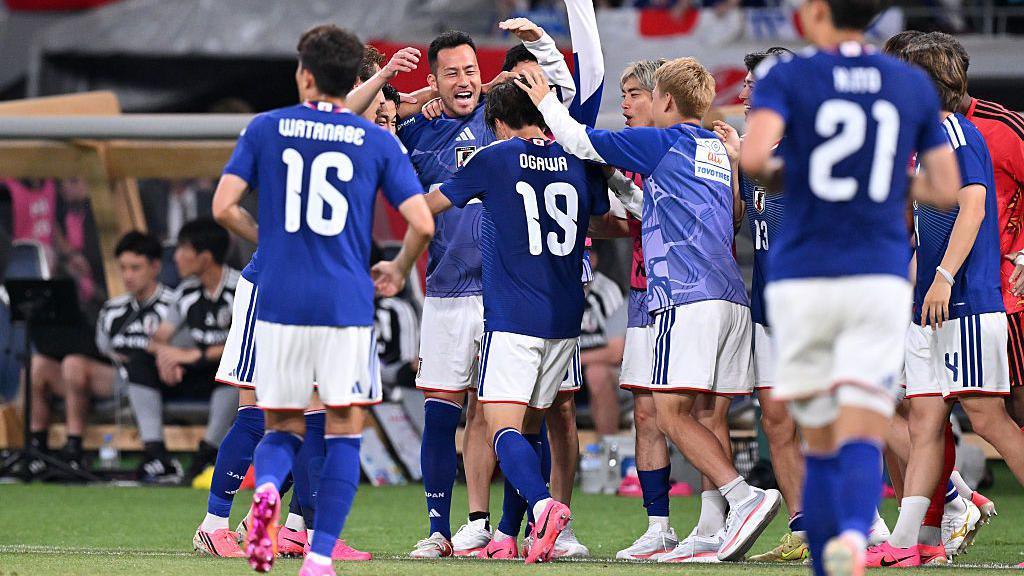
Recent performances further strengthen their case. Japan qualified for the World Cup with remarkable efficiency and have since recorded notable victories against strong opposition, including England and Brazil in the build-up to the tournament. These results demonstrate that Japan are no longer content with merely reaching the knockout stages—they are aiming to challenge the world’s best.
Japan’s Recent Results
| Date | Match | Result |
|---|---|---|
| May 31, 2026 | Japan vs Iceland | Won 1-0 |
| March 2026 | England vs Japan | Won 0-1 |
| March 2026 | Scotland vs Japan | Won 0-1 |
| June 2025 | Japan vs Indonesia | Won 6-0 |
| March 2025 | Japan vs Bahrain | Won 2-0 |
| 2022 World Cup | Japan vs Spain | Won 2-1 |
| 2022 World Cup | Japan vs Germany | Won 2-1 |
Japan’s FIFA World Cup 2026 Group Stage Fixtures
| Date | Fixture | Venue |
|---|---|---|
| June 14, 2026 | Netherlands vs Japan | Dallas |
| June 20, 2026 | Tunisia vs Japan | Monterrey |
| June 25, 2026 | Japan vs Sweden | Dallas |
Group Analysis and Potential Knockout Path
Group F presents both challenges and opportunities for Japan. The Netherlands are likely favorites to top the group, but Japan’s recent record against elite opposition suggests they can compete for points in the opening match. Tunisia are disciplined and difficult to break down, while Sweden possess physicality and tournament experience. However, none of these opponents are unbeatable for a Japanese side that has already proven capable of defeating the best in the world.
A realistic scenario could see Japan finish second behind the Netherlands or even challenge for top spot if they secure a positive result in their opening fixture. The expanded 48-team World Cup and Round of 32 format also provide a more favorable pathway into the knockout rounds than previous editions.
Should Japan advance, their disciplined structure and tactical flexibility make them a dangerous opponent in one-off matches